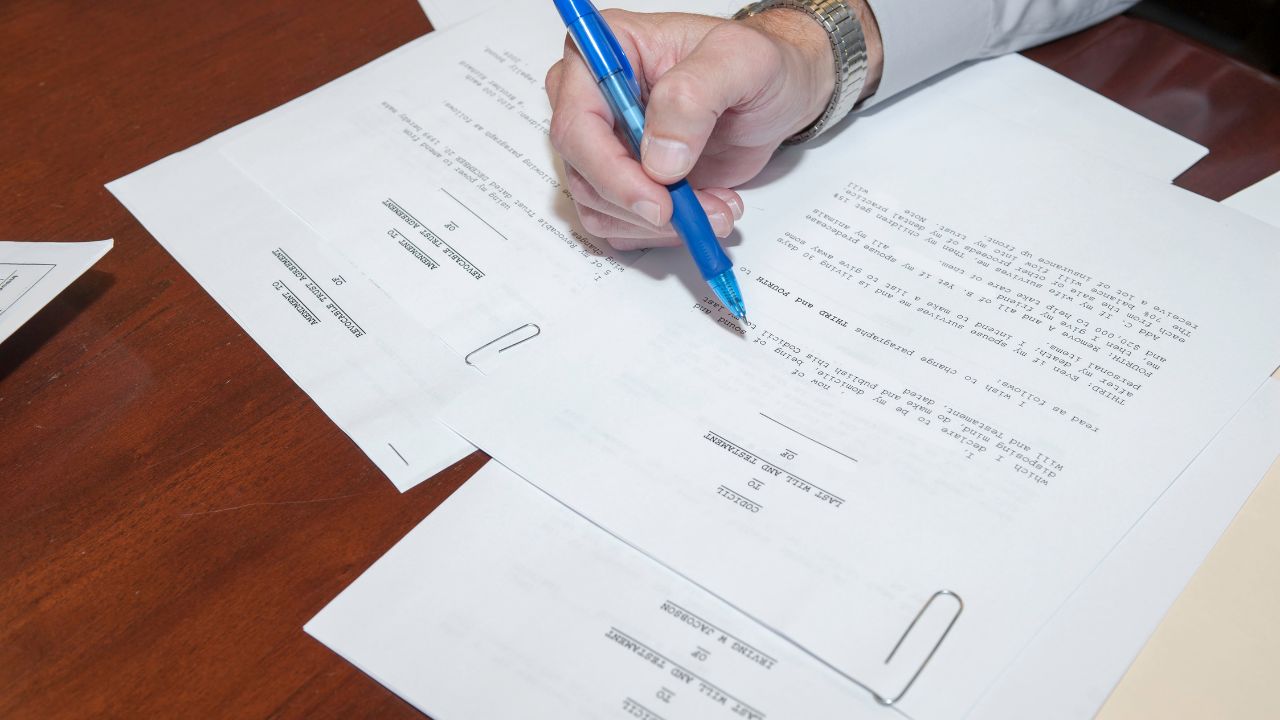
A codicil lets you make targeted changes to your existing will without starting over. Whether you need to update a beneficiary, swap an executor, or adjust a bequest, this legal amendment keeps your estate plan current as life evolves. But codicils carry strict execution requirements under California law, and mistakes can invalidate your wishes entirely. Working with an estate planning attorney in Orange County ensures your codicil is drafted correctly. This guide covers when to use one, how it works, and what pitfalls to avoid.
Key Takeaways
Adding a codicil requires the same legal formalities as creating your original will. Working with an estate planning attorney in Orange County helps ensure every step is done correctly. California’s Probate Code requires your codicil to be in writing, signed in front of two disinterested witnesses, and clearly reference the original will by date. Skipping any of these steps can void the amendment entirely. The process typically involves reviewing your current will for conflicts, drafting precise legal language, executing the document under proper witness protocols, and storing the codicil alongside your original will. Attorney fees for a single codicil generally run lower than a full will redraft, making this a cost-effective option when the change is narrow and well-defined.
A codicil may seem simple, but poor drafting leads to probate disputes. An Orange County wills and trust attorney ensures your amendment integrates cleanly with your existing documents and doesn't create conflicts. Most estate planning attorneys offer free consultations to assess your needs and quote fees. A single codicil typically costs less than a full redraft, but multiple amendments can approach the same price.
California codicils must be in writing, signed by the testator, and witnessed by two individuals who have no financial interest in the estate. Beneficiaries who serve as witnesses risk invalidating the document or losing their inheritance. Notarization isn't legally required but adds a layer of protection. The codicil should include your full legal name, address, the dates of both the codicil and original will, and a declaration of sound mind.
A codicil works best for small, isolated changes. Anything beyond a minor update usually calls for a complete redraft or a conversation with an Orange County wills and trust attorney about alternatives. Choose a codicil if you need to make a single, straightforward change—such as swapping an executor, updating a beneficiary’s legal name, or adding a small specific bequest. Choose a full redraft when your will already has two or more codicils, the change involves a primary beneficiary or asset distribution, or you need to restructure guardianship provisions. Choose a revocable living trust when you want to avoid probate entirely and need flexible, ongoing amendment capability.
Codicils make sense for straightforward adjustments: changing an executor, updating a beneficiary's name after marriage or divorce, or adding a small specific bequest. They're also useful when tax law changes affect your plan. If your estate falls below the federal threshold amount, a codicil can simplify provisions you no longer need. Beyond these narrow situations, a codicil is often unlikely to fit seamlessly with the original will and recommends drafting a new one instead.
If your will already has two or three codicils, or the change involves a primary beneficiary, it's time for a new will. There's no legal cap on codicils, but stacking them increases contradictions and complicates probate. The old advantage of codicils — avoiding a handwritten redraft — is irrelevant with modern legal software. A trust attorney in Orange County may also recommend a revocable living trust as an alternative. Trusts amend more easily than wills and bypass probate entirely.
When to choose each option: Choose a codicil if you are making one or two minor changes, such as updating an executor or correcting a beneficiary’s name, and your will has no prior codicils. Choose a new will when the change is substantial, when your will already carries multiple amendments, or when you need to restructure asset distribution. Choose a revocable living trust when you want to bypass probate entirely, need flexible ongoing amendments, or hold real estate or financial accounts that benefit from trust-based management.
A codicil can modify nearly any provision in your will — from who inherits to how assets are divided. Common amendments include naming new beneficiaries after marriage, divorce, or a death in the family, replacing an executor who can no longer serve, appointing guardians for minor children, redirecting specific bequests such as real property or heirlooms, and adjusting cash gifts or residuary shares. Each modification must use precise legal language that integrates with your original will without creating contradictions. An estate planning attorney in Orange County can draft the amendment so it aligns with California’s community property rules and your existing non-probate asset designations.
Not changing your will after a major event can leave a loved one inadvertently excluded from your plan. An estate planning attorney in Orange County can draft a codicil that names new beneficiaries, swaps executors, or appoints guardians for minor inheritors. Every gift should also include an alternate beneficiary to prevent assets from defaulting to probate.
Your will likely contains four types of bequests: specific (a particular item), general (a dollar amount), demonstrative (a set amount from a named account), and residuary (everything remaining). A codicil can modify any of these. Acting quickly matters — if you sell a specifically bequeathed asset and don't update your will, the gift fails entirely through a doctrine called ademption. An Orange County wills and trust attorney may also recommend using percentages rather than fixed dollar amounts to protect beneficiaries from abatement, where gifts are proportionally reduced when estate assets fall short.
Codicils carry real legal risks when drafted carelessly. Understanding the most common pitfalls helps you avoid probate disputes and protect your beneficiaries. The most frequent problems include conflicting provisions between the codicil and the original will, improper execution procedures such as using unqualified witnesses, ambiguous language that courts cannot interpret, and failure to coordinate the codicil with non-probate assets like life insurance policies and retirement account beneficiary designations. Each of these errors can trigger litigation that delays estate distribution, depletes assets through legal fees, and damages family relationships. An estate planning attorney in Orange County can identify and prevent these risks before they become courtroom disputes.
A codicil that contradicts the original will — such as leaving the same asset to two different people — creates grounds for a will contest. Multiple codicils compound this risk, making the estate harder for the executor and court to reconcile. Codicil modifications can also trigger unintended tax consequences that go unnoticed without professional review. Another overlooked danger: beneficiary designations on life insurance and retirement accounts supersede your will. If a codicil changes your intended distribution but those designations stay the same, the wrong person may inherit. An Orange County probate attorney can audit your full plan for these conflicts before they reach a courtroom.
If a codicil is invalidated—due to improper execution, conflicting provisions, or unqualified witnesses—the California probate court steps in to determine how your estate is distributed. This process can take over a year and cost a percentage of your estate’s value in court and attorney fees. Assets become part of the public record, and your beneficiaries may receive far less than you intended. A contested codicil can also trigger will challenges from excluded heirs, drawing out litigation and depleting the estate further. Working with an Orange County probate attorney helps families navigate these disputes and protect what remains of the estate.
A valid codicil requires more than correct signatures. California law imposes specific rules that, if missed, can send your estate into costly probate litigation. Beyond witness and signing requirements, California’s community property framework, probate fee structure, and digital estate laws all affect how your codicil must be drafted. A codicil that ignores spousal protections can be partially invalidated, and one that fails to address digital assets may leave online accounts in legal limbo. Working with an estate planning attorney in Orange County ensures your amendment satisfies every California-specific requirement while coordinating with your broader estate plan, including trusts, beneficiary designations, and powers of attorney.
An experienced estate planning attorney in Orange County goes beyond document preparation — they identify tax implications, Medicaid eligibility issues, and succession planning gaps a template cannot catch. Ethical attorneys also watch for red flags like cognitive impairment, third-party influence, or a rushed process that could later invalidate the codicil. Families with special needs dependents face particular risk. A DIY codicil cannot create the specialized trust these situations demand. For estates approaching the federal tax exemption, sophisticated planning is equally critical. Once finalized, store your codicil with the original will and inform your executor of both documents' location.
A properly executed codicil helps avoid the probate process. California requires two non-beneficiary witnesses; notarization isn't mandatory but makes the document self-proving. As a community property state, California treats most marital assets as jointly owned — your codicil must account for this or risk conflicting with spousal protections that prevent complete disinheritance.
Don't risk your family's future with a DIY amendment. Parker Law Offices provides experienced guidance on codicils, will updates, and comprehensive estate planning tailored to California law. Whether you need to update a single beneficiary or restructure your entire estate plan, our attorneys review your existing documents, identify conflicts with non-probate assets, and draft amendments that comply with California’s witness, community property, and digital estate requirements. Schedule your free consultation today to ensure your wishes are legally protected and your loved ones are provided for. Contact our Orange County estate planning team.