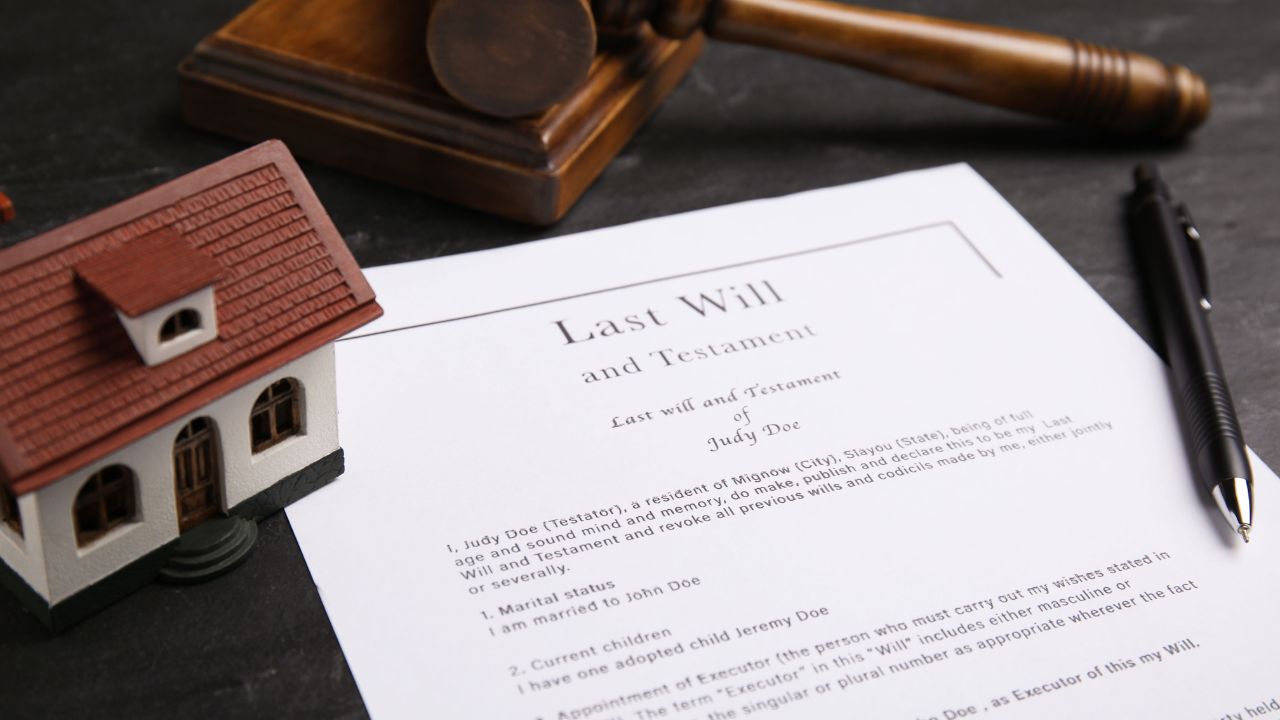
California estate law allows you to disinherit someone in California through a will, a trust, or clear written instructions, but doing so takes more than leaving a person's name off a document. A valid plan accounts for how property is owned, the spousal and child protections built into state law, and the formal requirements for signing and witnessing wills and trusts.
Below, you'll find the legal disinheritance options available under California law, the statutory limits that can undo a disinheritance, the role of no-contest clauses, and when a California estate planning attorney can help reduce the risk of a court challenge.
Disinheritance is the intentional exclusion of a person from receiving property through a will, trust, or other estate planning document. California law generally allows adults with testamentary capacity to choose their beneficiaries, but certain relationships and asset classifications limit how far disinheritance can extend.
Express disinheritance uses clear written language identifying the person and stating the intent to exclude them. Omission leaves a person out without explanation, which can create ambiguity and increase litigation risk.
Adult children and other heirs without special statutory protections can typically be disinherited through clear written instructions in a will or trust. Spouses, omitted spouses, and after-born or adopted children have stronger statutory protections that can override a disinheritance attempt if the plan isn't properly structured.
Common reasons for disinheritance include estrangement, financial abuse, addiction concerns, creditor exposure, or family conflict. Each situation calls for a review of property ownership, relationship status, and the timing of the estate plan to confirm whether disinheritance is legally possible.
Express disinheritance names the person and states the intent to exclude them from any inheritance. Omission simply leaves the person out of the document without explanation, which can create confusion and invite legal challenges.
Silence is riskier than clear language because California courts may read an absence as oversight rather than intent. Express wording reduces ambiguity and helps defend the plan against claims of mistake or undue influence.
California Family Code § 760 provides that property acquired by a married person during marriage while domiciled in California is community property, except as otherwise provided by statute. One spouse can't unilaterally give away the other spouse's community property ownership interest through a will or trust.
Dependents, creditors, contract rights, joint ownership, beneficiary designations, and trust terms can all affect what property is actually available for disinheritance. Asset classification and titling should be reviewed before drafting any disinheritance language to keep the plan enforceable.
California offers several legal tools for disinheritance, including wills, revocable living trusts, beneficiary designations, asset titling, and no-contest clauses, each with its own formal requirements and limits. Coordinating every document and asset title matters because a complete plan has to address probate assets, trust assets, and non-probate transfers so nothing passes to the disinherited person by accident.
| Tool | How It's Used to Disinherit | Key Limitation |
|---|---|---|
| Will | Names the person and states the intent to exclude them; must meet witnessing rules or qualify as holographic. | Can be challenged for capacity, undue influence, or improper execution. |
| Revocable Living Trust | Amended or revoked using the procedure set out in the trust instrument. | Skipping the trust's own amendment procedure can invalidate the change. |
| Beneficiary Designations & Asset Titling | Retirement accounts, life insurance, and payable/transfer-on-death accounts are updated to remove the person. | An outdated form overrides the will or trust and pays out anyway. |
| No-Contest Clause | Discourages a challenge by revoking the challenger's gift if they lose. | Doesn’t stop a challenge brought with probable cause. |
California Probate Code § 6100 requires a person to be at least 18 years old and of sound mind to make a will, and § 6110 requires it to be signed by the testator (or an authorized person) and witnessed by at least two people during the testator's lifetime. Probate Code § 6111 allows a holographic will without witnesses if the signature and material provisions are in the testator's own handwriting.
Writing a will to disinherit heirs has to satisfy § 6110 or qualify as holographic under § 6111 to be enforceable.
Probate Code § 15401 allows a revocable trust to be revoked using the method in the trust instrument, or by a signed writing delivered to the trustee during the settlor's lifetime, and § 15402 allows it to be modified the same way unless the trust says otherwise. Terminating a trust or amending it to disinherit a beneficiary means following that exact procedure, since skipping it can leave the disinheritance open to challenge after death.
Retirement accounts, life insurance policies, payable-on-death accounts, transfer-on-death accounts, and jointly titled assets can bypass a will or trust entirely. Beneficiary designations and asset titling need to be coordinated with the will and trust so the disinherited person doesn't receive assets through a non-probate transfer.
Reviewing and updating every beneficiary form matters because an outdated designation can override the disinheritance language in your will or trust. Even a well-drafted plan can't control an asset that passes by beneficiary designation or joint ownership with survivorship rights.
Probate Code § 21311 defines probable cause as facts that would lead a reasonable person to believe there's a reasonable likelihood of relief after further investigation. A no-contest clause only applies to specified contests brought without probable cause, so probable-cause challenges and certain property-right challenges can still proceed despite one. These clauses discourage meritless challenges, but § 21311 limits them, and they can't block every lawsuit.
The main limitations of disinheritance in California come from spousal community property rights, the omitted-spouse and omitted-child statutes, and challenges based on capacity or undue influence. These protections can override disinheritance language and produce a result the decedent never intended.
Outdated documents, ambiguous drafting, and uncoordinated beneficiary designations add further risk that a disinheritance plan will fail.
Probate Code § 21610 sets the omitted spouse's statutory share at up to one-half of the decedent's community and quasi-community property, plus up to one-half of the separate property (see the statute table below), unless the spouse has waived rights through a valid premarital or postnuptial agreement.
A surviving spouse who married the decedent after all testamentary instruments were signed can still receive an omitted-spouse share under § 21610 unless an exception applies, and under § 21620, a child born or adopted after those instruments were signed can receive an omitted-child share equal to what they'd have received by intestacy. Both situations create statutory risk if the plan isn't updated to address the new spouse or child directly.
Probate Code § 6104 makes a will's execution or revocation ineffective to the extent it was procured by duress, menace, fraud, or undue influence. A disinheritance tends to be high-conflict and more likely to be challenged, so execution circumstances and documentation matter.
§ 21310 defines direct contest grounds, including forgery, lack of due execution, lack of capacity, duress, fraud, undue influence, revocation, and beneficiary disqualification. Capacity and undue influence are common attack points because the excluded person has a strong motive to challenge the plan.
Ambiguous or outdated documents create litigation risk that can drag the estate into a prolonged probate or trust contest. Old plans, missing amendments, contradictory beneficiary designations, and unclear residue clauses all give a disinherited person room to argue mistake or oversight.
A disinheritance clause is only as strong as the instrument and evidence behind it. Skipping updates after a major life change raises the odds that a disinheritance will be challenged successfully.
| Statute | What It Covers |
|---|---|
| Family Code § 760 | Defines community property acquired during marriage in California. |
| Probate Code § 6100 | Sets the age (18) and capacity requirement to make a will. |
| Probate Code § 6110 | Requires a standard will to be signed and witnessed by two people. |
| Probate Code § 6111 | Allows a holographic (handwritten, unwitnessed) will. |
| Probate Code §§ 15401–15402 | Governs how a revocable trust can be revoked or amended. |
| Probate Code § 21311 | Defines "probable cause" for no-contest clause enforcement. |
| Probate Code § 21610 | Sets the omitted spouse's statutory share of community and separate property. |
| Probate Code § 21620 | Sets the omitted child's statutory share. |
| Probate Code § 6104 | Voids a will procured by duress, fraud, or undue influence. |
| Probate Code § 21310 | Defines the grounds for a direct contest. |
Reducing litigation risk takes careful drafting, proper execution procedures, consistent documentation, and regular updates after major life events. Preventive planning lowers the odds that a disinherited person will successfully challenge the plan in court.
Attorney-guided planning helps meet California's legal requirements and creates a record that defends against capacity and undue influence claims.
Documenting testamentary capacity and independent decision-making at the time of signing strengthens the plan against later challenges. Medical records, attorney notes, and witness observations can support the disinheritance if a contest arises.
Meeting with the attorney alone to answer capacity-related questions creates a record of competence, and video recordings or physician evaluations can add further evidence that the testator understood the plan.
Express language naming the disinherited person and stating the intent to exclude them reduces ambiguity and litigation risk. Alternate beneficiaries should be named clearly to avoid an unintended distribution if the plan is challenged.
Precise drafting removes room for interpretive disputes and gives clear instructions to the executor or trustee. Estate planning protections require language that's enforceable and factually accurate enough to withstand judicial scrutiny.
Marriage, divorce, remarriage, adoption, death, or a major real estate purchase are all triggers for reviewing and potentially amending the plan. Skipping a review after these events raises the risk that the omitted-spouse or omitted-child statutes will apply.
Reviewing the plan after significant life changes keeps the disinheritance enforceable and consistent with current family circumstances. Timely amendments prevent unintended distributions.
A carefully drafted no-contest clause, compliant with § 21311 and paired with a meaningful bequest, can discourage weak or meritless challenges from a disinherited person. These clauses are most effective when the person has enough to lose that a challenge isn't worth the cost, and an attorney should draft the language carefully to avoid blocking a legitimate contest.
Working with a California estate lawyer matters when disinheriting someone because the legal risks and procedural requirements are fact-specific, and self-drafted documents or online forms often miss community property, omitted-spouse, omitted-child, and execution risks. Attorney guidance helps meet California statutes and creates a defensible plan that protects the estate from costly disputes after death.
California estate law has community property rules, statutory protections, and execution requirements that differ from other states. An attorney experienced in California estate law can design a disinheritance plan that complies with these rules.
Generic online documents often miss California's omitted-spouse and omitted-child statutes, or misclassify community property. California-focused legal guidance keeps the plan enforceable under the correct framework.
An attorney can review asset classifications, identify community property interests, and explain the limits of spousal disinheritance under California law. Legal counsel also helps clients understand when a premarital or postnuptial agreement is needed to reach a disinheritance goal.
Family dynamics and emotional conflicts call for sensitive handling that balances legal objectives with practical relationship considerations.
Trust amendments, will codicils, beneficiary designations, and title records all need to be updated consistently to prevent an unintended distribution to a disinherited person. Attorneys coordinate these updates so every asset is covered, since failing to coordinate asset titling with the plan is a common cause of a failed disinheritance.
Attorneys explain the legal limitations of disinheritance, including statutory protections that can't be overridden through drafting alone, so clients can set realistic expectations. Managing family conflict from there means balancing legal rights with emotional realities and long-term relationship goals.
Implementing a disinheritance plan takes a systematic approach that starts with identifying the person and assets involved and ends with ongoing plan maintenance. A structured sequence helps meet every legal requirement and reduces the risk of an omission or error.
Identifying exactly who is being disinherited, and from which assets, is the essential first step. Clarity about scope prevents an unintended distribution and makes sure every relevant asset gets addressed.
The identification process should include a complete asset inventory and relationship analysis as part of an estate plan.
Property has to be classified as separate, community, trust-owned, beneficiary-designated, jointly owned, or a probate asset before drafting disinheritance language, since each classification carries different ownership rules and restrictions from spousal rights, omitted-child protections, and contractual limits.
Drafting requires express disinheritance language in the will, trust, or other instrument that clearly names the person and states the intent to exclude them. Coordinating every document and asset title keeps the disinheritance consistent and enforceable.
Properly executed amendments, codicils, and beneficiary designation changes are all needed to carry the disinheritance across every asset type.
Direct contest categories include forgery, lack of due execution, lack of capacity, duress, fraud, undue influence, revocation, and beneficiary disqualification, so anticipating these grounds and building a defensive record lowers the odds that a contest will succeed. Marriage, divorce, births, adoptions, or a major asset purchase should all trigger a plan review to keep the disinheritance aligned with current circumstances.
Strategic disinheritance means understanding the full range of legal disinheritance options under California law, along with the statutory and practical limitations that can restrict or defeat the plan. Under California estate law, disinheritance decisions hold up through express drafting, proper execution, consistent coordination across every asset, and ongoing maintenance after major life events, and working with a California estate planning attorney lowers litigation risk while helping clients build an enforceable plan that protects the people they intend to provide for.
Parker Law Offices helps California families design clear estate plans that address disinheritance goals while managing community property, statutory protections, and family conflict risks. With over 25 years of combined team experience and a background in real estate planning, the firm provides compassionate guidance through sensitive estate planning decisions.
If you need to disinherit someone in California, the details matter as much as the intent. Parker Law Offices can review your family situation, coordinate your will, trust, and beneficiary designations, and draft language built to hold up under California law. Call (949) 867-4818 or request a consultation to get started.
A. Not entirely, in most cases. California's community property rules already give your spouse an ownership interest in half of what you earned during the marriage, and the omitted-spouse statute under Probate Code § 21610 can award your spouse a share even if your will or trust says nothing about them. A valid premarital or postnuptial agreement is the most reliable way to waive these rights.
A. No. California law doesn't require you to explain why you're excluding someone from your will or trust. Naming the person and expressly stating your intent to exclude them is safer than silence, though, because it removes any argument that the omission was a mistake rather than a deliberate choice.
A child born or adopted after you sign your will or trust can typically claim an omitted-child share equal to what they'd receive under intestacy, unless a statutory exception applies under Probate Code § 21620. Reviewing your plan after a birth or adoption is the only reliable way to prevent this.
A. It can discourage some challenges but can't stop all of them. Under Probate Code § 21311, a no-contest clause only penalizes a challenge brought without probable cause. A beneficiary with a reasonable basis to contest the will or trust can still bring a direct contest without losing their share.
A. Both can be challenged on similar grounds, including lack of capacity, undue influence, and improper execution. A properly funded trust avoids probate, which keeps the process private and can reduce the visibility of a challenge, but it doesn't eliminate the legal grounds available to a disinherited person.